THE MANIPULATION PLAYBOOK
21 Tactics That Hijack Your Mind — From Love Bombing to the Reinforcement Loop That Won’t Let You Go INTRODUCTION
Imagine sitting in your car in your own driveway for twenty minutes with the engine turned off. Your hands rest on the steering wheel, but your body feels entirely too exhausted to open the door and walk inside.
You are mentally rehearsing what you will say the moment you walk through the door, calculating how to phrase your sentences to avoid a fight. You double-check your actions: Did I text back fast enough today? Did I use the wrong tone? Did I do anything that could be twisted into a problem?
You are not dealing with a movie villain. You are dealing with someone close to you—a romantic partner, a parent, a close friend, or a manager. To the outside world, this person is charming, reasonable, and well-liked. But in private, you feel like you are constantly walking on eggshells, doubting your memory, and apologizing for things you never did.
You are experiencing psychological manipulation.
When we hear the word “manipulation,” we picture obvious cons or aggressive bullies. But real manipulation is subtle. It does not arrive wearing a warning label. It usually arrives wearing a smile, disguised as deep care, intense romance, or professional mentorship. This is why manipulation is so difficult to spot early. It happens slowly. If someone demanded absolute control over your life on day one, you would walk away. But what if, on day one, they made you feel more seen, valued, and understood than anyone else ever had? You would lean in. And that is how the trap begins.
Why Smart People Fall for It
There is a common myth that only weak or unintelligent people fall for manipulation. This is entirely false. Manipulators frequently target people who are deeply empathetic, loyal, and responsible.
If you have found yourself trapped in a manipulative dynamic, it is not because you lacked intelligence. It is because you are human. Manipulation works by targeting our most basic, healthy needs: the desire for love, the need for approval, the fear of abandonment, and the hope for a future together.
A manipulator does not attack your intellect; they attack your clarity. They use emotional pressure, confusion, guilt, and unpredictability to erode your trust in your own judgment. Over time, you stop looking at objective facts and begin relying entirely on the manipulator’s version of reality.
What This Book Is (And What It Is Not)
This book is a defensive manual. Its purpose is to help you recognize invisible manipulation patterns so you can protect your mind, your boundaries, and your personal autonomy.
It is divided into five progressive stages:
- Part I: The Hook — How relationships begin with overwhelming intensity and speed.
- Part II: The Trap — How attachment and dependency become solidified.
- Part III: The Erosion — How confidence, identity, and self-trust are chipped away.
- Part IV: The Break — How punishment, withdrawal, and emotional pressure intensify.
- Part V: The Loop — How multiple tactics reinforce one another to create a repeating cycle.
Following Part V, the book concludes with The Way Out, an unnumbered practical guide to rebuilding self-trust, establishing clean boundaries, and breaking free.
This book will not teach you how to manipulate others. “Dark psychology” is simply a popular term for exploitative behavior; it is not a magical superpower. The goal here is not to make you better at controlling people, but to make you harder to control. Let’s begin the journey from confusion to clarity.
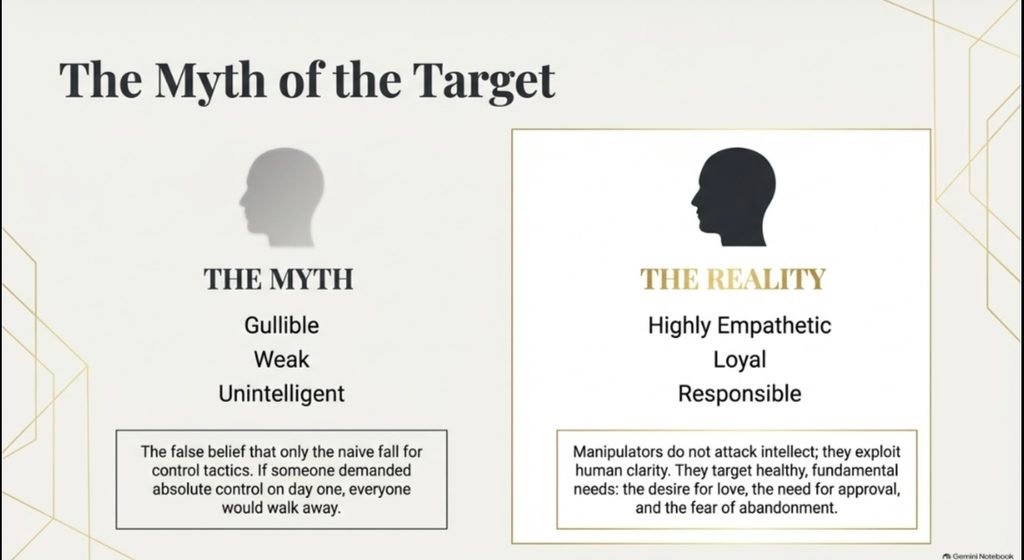
Table of Contents
Part 1: The Hook
- The Perfect Beginning
- The Future That Never Arrives
- Why They Feel Like Your Soulmate by Day Three
- The Clock That’s Always Running Out
- Why Moving Too Fast Feels So Right
Part 2: The Trap
- The Slot Machine Effect
- When Your Own Memory Becomes the Enemy
- The Island They Quietly Build Around You
- The Ghost in Every Conversation
- The Debt You Never Agreed To
- How You Forgot You Could Survive Without Them
Part 3: The Erosion
- The Slow Rewrite of Who You Are
- The Art of Making Your Pain Sound Small
- The Memory That Got Edited Without You
- Losing a Vote in Your Own Life
Part 4: The Break
- The Punishment That Uses No Words
- Just Enough to Keep You Waiting
- The Return That Isn’t What It Looks Like
- How the Person Who Hurt You Becomes the Victim
Part 5: The Loop
- Why Pain Can Feel Like Home
- Why Leaving Feels Like Losing Something Real
Part 6: The Way Out
Resolution Section
Part I: The Hook
— How relationships begin with overwhelming intensity and speed
Chapter 1
The Perfect Beginning (why the best chapter of your story might be the trap)
A new connection begins with an explosion of warmth. Every text is answered instantly, every interest is shared, and every moment spent together feels like a fairy tale. You feel completely understood, cherished, and safe, believing you have finally found someone who truly matches your soul.
What is Happening?
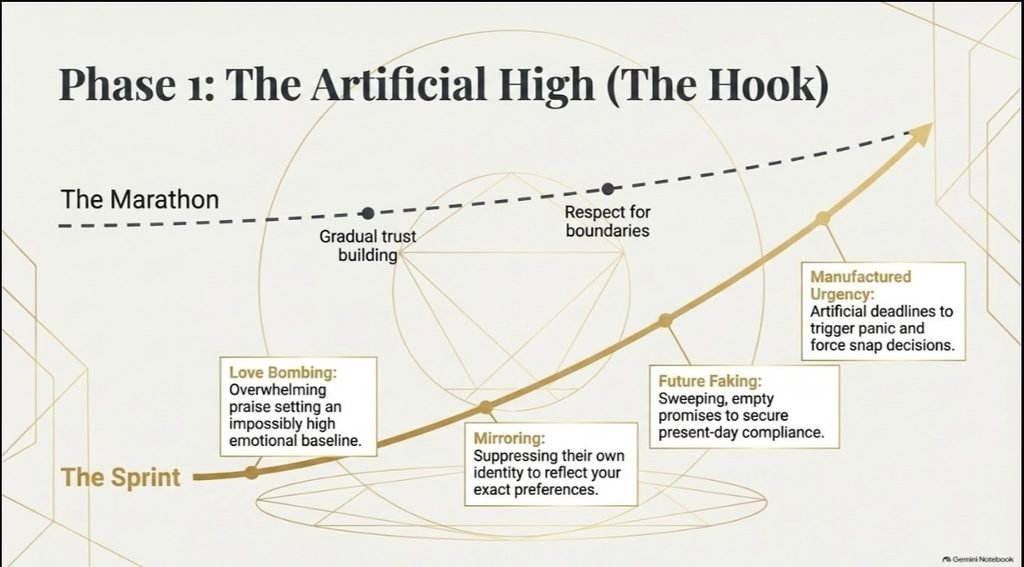
This is Love Bombing. It is the practice of overwhelming someone with excessive affection, constant attention, grand compliments, and premature future promises very early in a relationship. While healthy relationships build trust slowly over time, love bombing acts as a sprint, bypassing normal boundaries to force an instant, intense bond.
Why Does It Work?
Human beings crave validation and connection. When someone showers you with praise, your brain responds with a rush of positive emotions. However, psychologically, love bombing sets an impossibly high emotional baseline. It creates rapid dependence: you begin relying on this person’s constant praise to feel good about yourself. Later, when they withdraw this affection, you tolerate poor treatment because you are desperate to return to how things felt in week one.
What Does It Look Like?
- Extravagant gifts or grand gestures before you truly know each other.
- Demanding constant contact and texting endlessly throughout the day.
- Declaring deep love or talking about marriage and moving in together within the first few weeks.
- A new boss or colleague treating you like their “only trusted ally” on day two.
What Does It Sound Like?
- “I know we just met, but I’ve never felt this way about anyone. You are my soulmate.”
- “Why didn’t you text back for an hour? I was so worried about you. We share everything, remember?”
- “Everyone else at this company is incompetent. You’re the only one who actually understands my vision.”
Why Might Someone Fall for It?
If you have experienced loneliness, rejection, or difficult relationships in the past, a love bomber feels like a long-awaited reward. You fall for it not because you are gullible, but because they are offering the exact emotional nourishment you have been craving.
How Does It Develop?
The love-bombing phase is never permanent. Once the manipulator feels secure that you are emotionally attached, the intense affection abruptly cools down. Because the beginning was so euphoric, you do not blame them for the change; instead, you blame yourself, working harder to win back the “real” person you met at the start.
Warning Signs
- The pace of the relationship feels breathless and exhausting.
- They ignore your polite requests for space or boundaries, framing their intrusion as “passion” or “care.”
- They use absolute, extreme language very early on. The Tell
Ask yourself: Are they praising who I genuinely am over time, or are they praising an idealized fantasy? How do they react when I say “no” to their attention?
What Should You Do?
Slow the pace deliberately. Do not reply instantly to every message. Enforce small boundaries, such as taking an evening to yourself. Observe how they react when you put your foot on the brake pedal: a healthy person respects space; a manipulator reacts with guilt or anger.
Mini-Scenario
When someone pushes to spend every waking hour together immediately, pausing to state, “I’m having a great time, but I need tonight to catch up on my personal routine,” tests whether they respect your autonomy.
Chapter Takeaway
- Intensity is not intimacy.
- Love bombing creates artificial emotional dependence.
- The beginning of the cycle sets the trap for future tolerance of abuse. ● Healthy connections respect the brakes.
Chapter 2
The Future That Never Arrives
You find yourself working late, sacrificing your weekends, or tolerating bad behavior because someone has painted a breathtaking picture of what life will look like “once things settle down” or “after we reach our goal.”
What is Happening?
This is Future Faking. It occurs when someone makes grand, sweeping promises about tomorrow—promising promotions, shared homes, marriage, or financial security—to secure your labor, compliance, or emotional investment in the present.
Why Does It Work?
Humans are naturally wired to delay gratification and endure present hardships for a future reward. Manipulators exploit this hope. They act as an emotional credit card, letting you pay all the costs today while promising to clear the balance tomorrow, though the payment never actually arrives.
What Does It Look Like?
- A romantic partner constantly talking about future weddings and kids while refusing to make actual commitments.
- A boss dangling the promise of a raise or title change for months, requiring “just one more project” first.
- A relative promising inheritance or financial support in exchange for total present-day obedience.
What Does It Sound Like?
- “I know things are hard right now, but once my business takes off next month, I’m going to take care of everything for you.”
- “Why are you bringing up our lack of commitment? Don’t you trust that I’m building a future for us?”
Why Might Someone Fall for It?
You fall for future faking because the promises are tailored directly to your personal dreams. When you are suffering in the present, the idea of that future acts as a psychological painkiller.
How Does It Develop?
The manipulator learns your deepest goals during early conversations. They use those goals as currency. When you grow tired of waiting and demand action, they accuse you of being impatient or unsupportive, shifting the blame onto you.
- Warning Signs
- Words and daily actions completely contradict each other.
- There is always an excuse or a shifting goalpost delaying the promised outcome.
- Promises are brought up primarily as a defense mechanism when you try to hold them accountable.
- The Tell
Ask yourself: If I remove every promise they have ever made and look strictly at what they have done over the last six months, what is left?
- What Should You Do?
Judge people strictly by their present actions, not their potential. Require concrete, written timelines or measurable steps rather than verbal assurances.
- Mini-Scenario
When pressed about long-delayed commitments, responding calmly with, “I support your goals, but my need for stability requires actual steps today, not just promises,” cuts through the illusion.
- Chapter Takeaway
- Talking about the future requires zero effort; only action counts.
- Future faking weaponizes your own hopes against you.
- Beware of moving goalposts.
- Base your decisions on today’s reality.
Showing the single result